


















%20-%20Edge%20computing.png?width=264&height=264&name=Glass%20icon%20(dark)%20-%20Edge%20computing.png)

Scaling AI Across City Infrastructure: Insights from Smart City Summit & Expo 2026
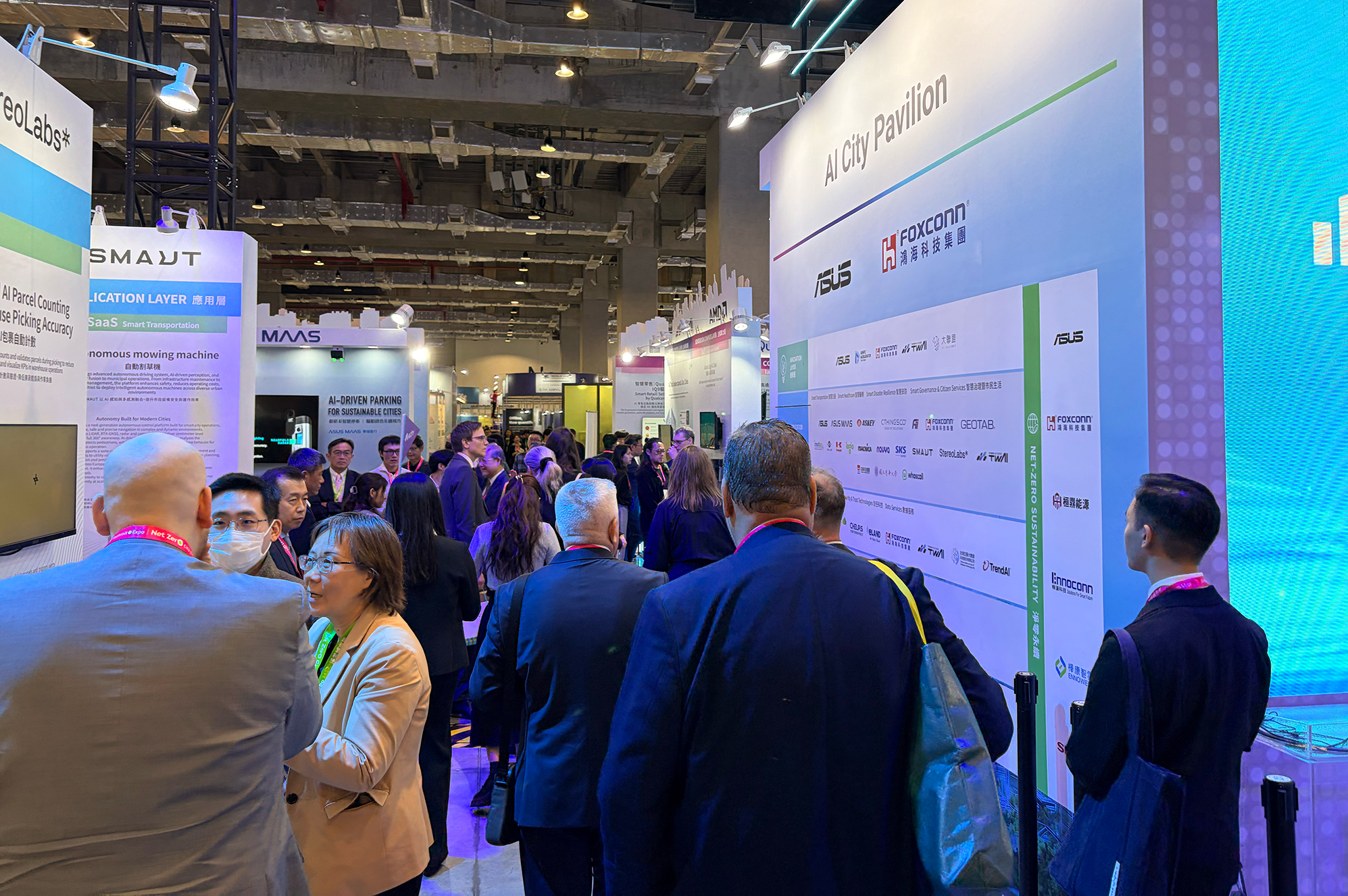
At the Smart City Summit & Expo 2026 in Taipei, one theme consistently emerged across discussions, demonstrations, and industry exchanges: as AI adoption in cities accelerates, the focus is shifting toward scaling it securely across real-world environments.
CTHINGS.CO joined global partners at the AI City Pavilion during Smart City Summit & Expo (SCSE) to explore what it takes to move from isolated pilot projects to fully operational, AI-driven urban infrastructure.
Smart City 4.0: From Innovation to Coordination
The AI City Pavilion presented a vision for Smart City 4.0, where cities move beyond isolated deployments toward integrated systems combining artificial intelligence, governance, infrastructure, and real-world applications.
This shift reflects a broader industry reality. Smart city success is no longer defined by deploying new technologies, but by the ability to coordinate complex systems across stakeholders, environments, and use cases.
The Scaling Problem: Where Smart City Initiatives Stall
Across transportation, utilities, energy, and public services, cities continue to invest in AI and IoT solutions. While pilot deployments often demonstrate clear value, scaling them introduces a different level of complexity.
From discussions at SCSE, three challenges consistently emerged:
- fragmented infrastructure across vendors and environments
- increasing operational complexity across thousands of distributed endpoints
- growing security risks as the attack surface expands
These challenges directly impact the ability of cities to maintain reliable services and deliver consistent outcomes.
Security and Operations: The New Bottlenecks
As deployments expand, security and operational control become central constraints.
Each connected asset—whether a smart infrastructure node, EV charger, or sensor—adds complexity to how systems are managed and secured. Especially in a multi-vendor environments without a unified orchestration, differences in architecture, standards, and capabilities can make it difficult for organizations to maintain a consistent approach across the entire infrastructure. This often results in:
- uneven levels of security across systems and devices
- limited visibility across distributed environments
- operational models that rely on reactive maintenance
These challenges compound as deployments grow, making it increasingly difficult to maintain control, reliability, and resilience.
Scaling AI therefore becomes a question of how to operate distributed infrastructure in a consistent, secure, and manageable way across real-world conditions.
Real-World Showcase at AI City Pavilion
Smart Infrastructure: Transforming Urban Assets into Intelligent Systems
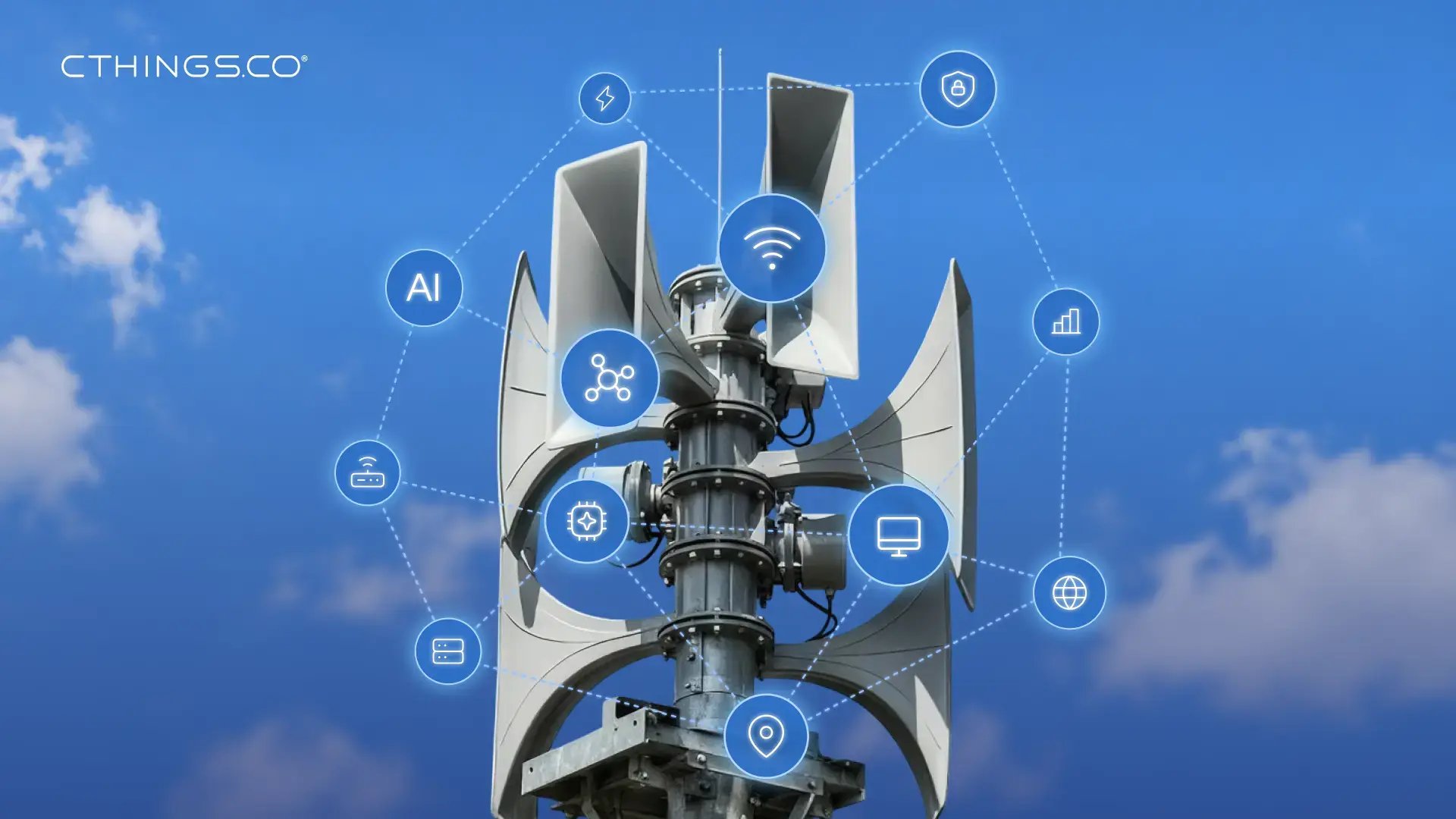
Urban infrastructure is evolving beyond its original purpose. In collaboration with infrastructure partners, CTHINGS.CO supports the transformation of traditional assets such as lamp poles into multifunctional, connected systems.
These intelligent nodes serve as edge computing hubs that enable:
- adaptive, energy-efficient lighting based on real-time conditions
- environmental monitoring, including air quality and noise levels
- traffic analysis and incident detection
- public safety features such as emergency communication and surveillance
By integrating sensors, connectivity, and edge computing with centralized orchestration, infrastructure becomes an active, data-driven component of city operations.
Through the Orchestra Technology Stack, cities can deploy and manage applications consistently across all nodes, ensuring reliability, reducing maintenance complexity, and enabling long-term scalability.
EV Charging Infrastructure: Ensuring Reliability at Scale
As electric vehicle adoption accelerates, charging networks must operate reliably across diverse environments. However, traditional systems often struggle with connectivity limitations and fragmented management.
CTHINGS.CO addresses these challenges with AI-powered edge orchestration, enabling:
- resilient, multi-network connectivity for uninterrupted operation
- real-time monitoring and remote diagnostics
- predictive maintenance to minimize downtime
- centralized management across distributed charger networks
This approach improves operational efficiency and lowers cost maintenance significantly while ensuring that EV infrastructure can scale in line with growing demand.
Compliance and Trust: Bridging Global Innovation with European Requirements
While Smart City Summit & Expo 2026 highlighted global innovation, it also underscored an increasingly important factor for companies deploying connected solutions in Europe: regulatory compliance.
In the European context, frameworks such as the Cyber Resilience Act and evolving data governance standards are redefining how infrastructure must be designed, deployed, and maintained.
For cities and infrastructure operators, compliance is not only a regulatory requirement but a foundation for:
- ensuring system integrity and reliability
- mitigating operational and cybersecurity risks
- building trust with citizens and stakeholders
Smart infrastructure must therefore support:
- continuous monitoring and data logging
- automated policy enforcement
- secure lifecycle management across all devices and applications
By embedding these capabilities at the orchestration level, cities can align innovation with regulatory expectations while maintaining flexibility and scalability.
From Infrastructure to Outcomes
When infrastructure is secure, consistent, and manageable, cities can shift their focus from operations to outcomes.
Real-time data processing at the edge enables:
- more efficient energy usage
- improved transportation systems
- enhanced public safety and responsiveness
- better delivery of urban services
The value of smart city systems lies not only in collecting data, but in acting on it reliably and in real time.
To deliver lasting impact, these systems must also be designed for sustainability—supporting long infrastructure lifecycles, optimizing resource usage, and creating measurable, long-term benefits for cities and operators. alike
Advancing Toward Operational Smart Cities
Smart City Summit & Expo 2026 reinforced a clear transition in the industry. Cities are moving beyond Edge AI experimentation and entering a phase where success depends on operational maturity.
This requires:
- security across all layers of infrastructure
- consistent lifecycle management
- resilience in distributed environments
- flexibility to integrate across systems and vendors
CTHINGS.CO continues to work with partners and cities to support this transition through Orchestra Technology Stack, enabling the deployment and operation of AI-driven infrastructure that is secure, scalable, and ready for real-world conditions and evolving regulatory compliance.


.svg)
.svg)


