

















%20-%20Edge%20computing.png?width=264&height=264&name=Glass%20icon%20(dark)%20-%20Edge%20computing.png)
CTHINGS.CO Technology Strengthens Poland’s Nationwide Public Warning System
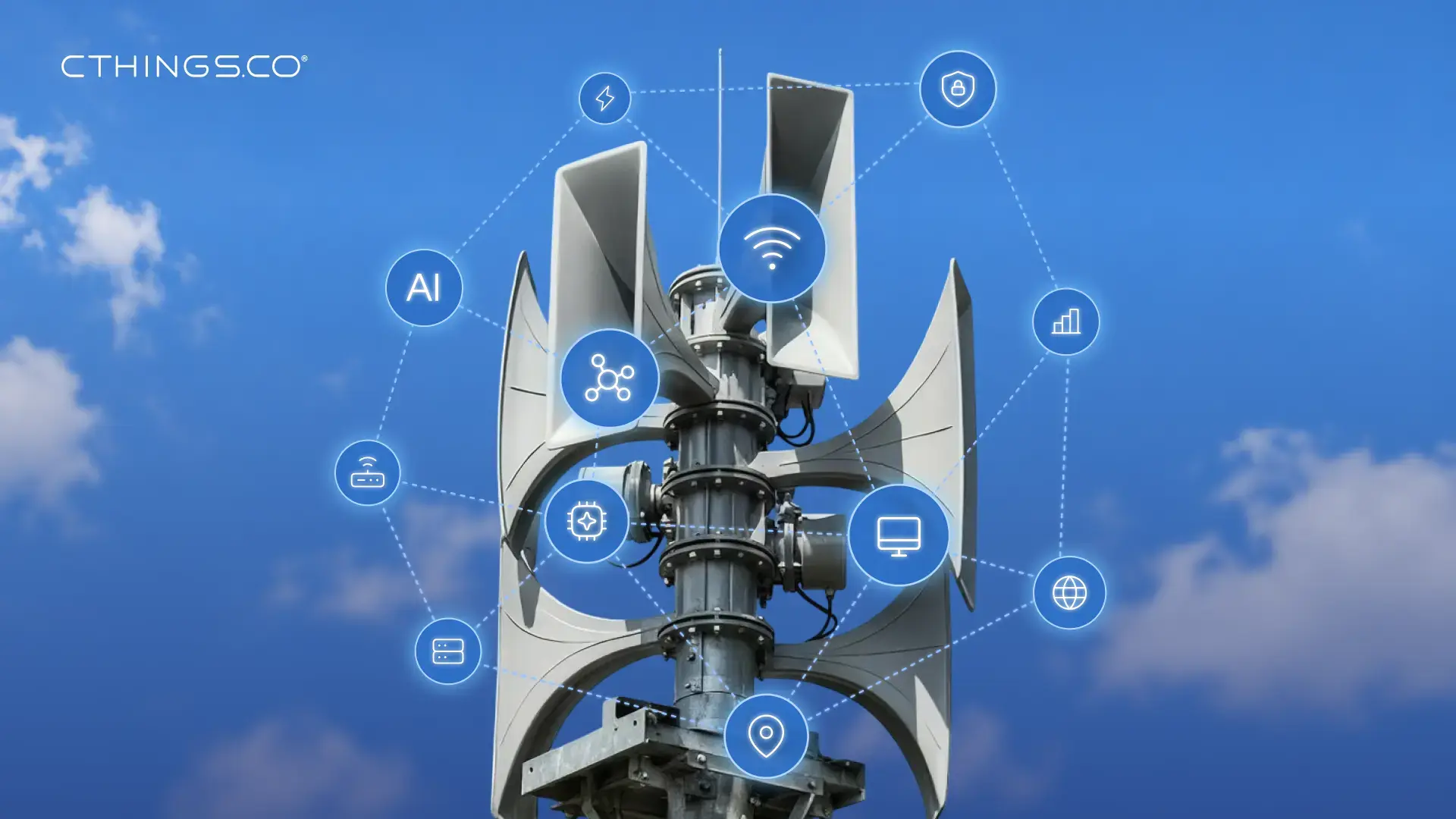
WARSAW, Poland — 28.09.2026 — In a nationwide warning system, every location matters. Poland’s Warning and Alarm System (SOiA) is being developed to bring existing alarm infrastructure into a modern, country-wide communications and management environment. In practice, this means connecting thousands of devices deployed across different locations, often supplied by different manufacturers, while giving operators secure access and control over the infrastructure.
This was the challenge addressed by a consortium of INNERGO and CTHINGS.CO in a project delivered for the Headquarters of the State Fire Service of Poland. The partners combined expertise in systems integration, edge infrastructure and LoRaWAN connectivity.
As part of the project, 3,711 Preconfigured Local Units (PZLs) were prepared and delivered to 310 State Fire Service locations across all 16 Polish regions. CTHINGS.CO was responsible for the edge device technology and the process used to prepare the units.
Production was completed over 21 active working days. During that period, every unit had to be assembled, configured, tested and documented before shipment. CTHINGS.CO, a Warsaw-based technology company developing IoT solutions and software for distributed edge infrastructure, also created a dedicated process to prepare thousands of devices in a repeatable and controlled way.
Built to work with existing alarm infrastructure
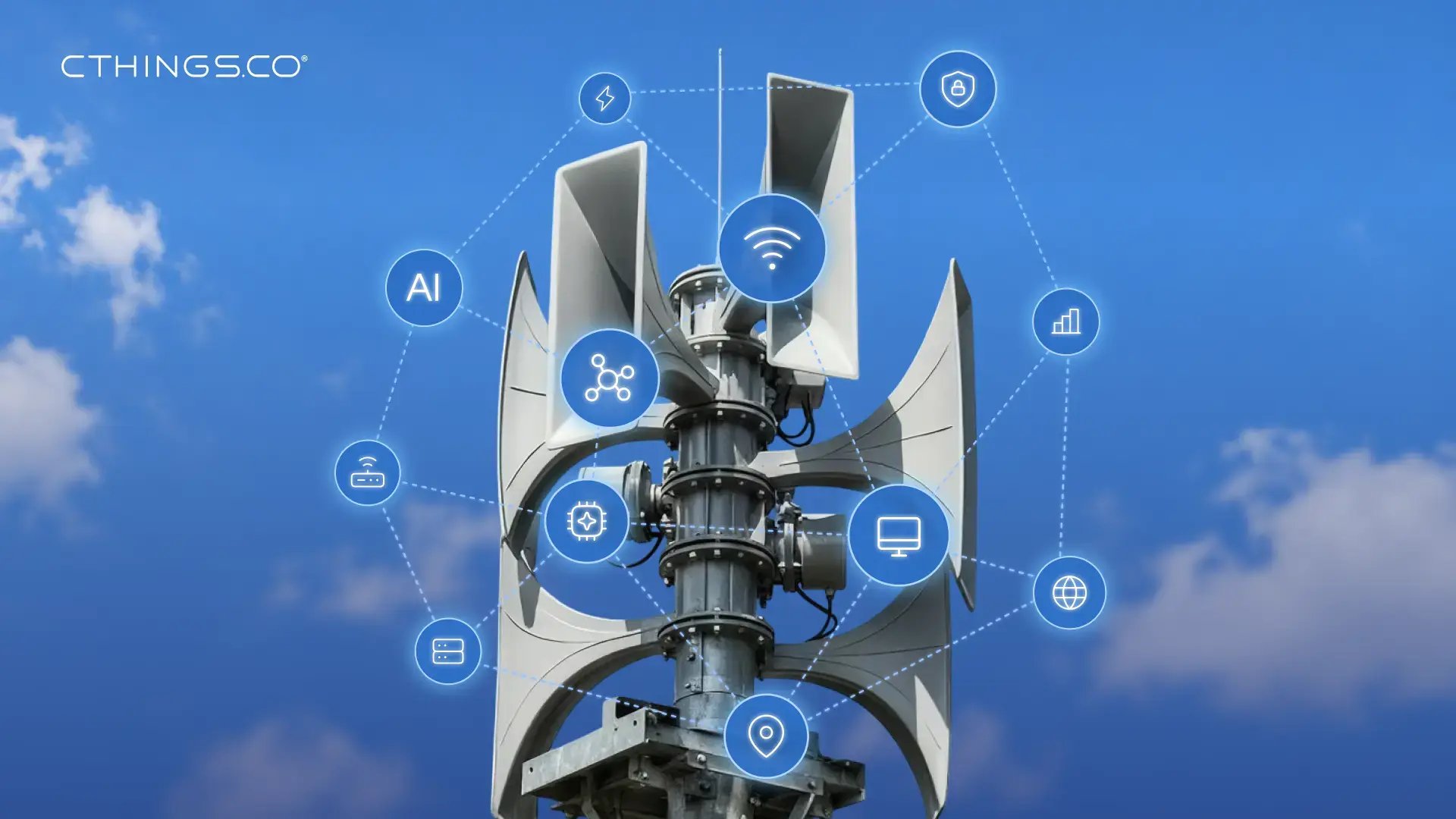
Poland has approximately 22,000 alarm sirens in operation. Developing SOiA therefore requires the new system to work with infrastructure installed over many years, including equipment from multiple vendors.
Each PZL includes a Siren Controller, a CTHINGS.CO Edge Gateway, a LoRaWAN gateway, as well as power supply and backup components. The units were prepared for deployment at locations designated by the State Fire Service.
The controller can work with different types of sirens and OT/IT systems, allowing existing infrastructure to be gradually integrated into the developing system without requiring everything to be replaced at once.
The solution is designed to enable authorised operators to remotely control sirens and selected surrounding devices. It also takes into account continued operation during mains power outages — an important requirement for infrastructure whose purpose is to warn people quickly in an emergency.
Communication with devices across the country
Another element of the project is a dedicated LoRaWAN base station infrastructure, providing a communications channel to field devices and creating a foundation for the further development of an IoT network for the State Fire Service. The deployment spans locations across Poland.
At this scale, connectivity alone is only part of the challenge. Data and information from field devices must reach a common management environment, while operators need to maintain control over access, infrastructure status and actions performed remotely.
Thousands of units, one quality standard
To prepare thousands of PZLs within a short timeframe, CTHINGS.CO developed PSPMFG, a dedicated production environment for the State Fire Service project. It linked each physical device with a digital record of its configuration, testing, documentation and preparation for delivery.
Every unit passed through 17 preparation and configuration stages and 17 factory testing stages before it could be approved as complete.
The software supported the team in analyzing issues and preparing changes, while decisions concerning the physical devices and final confirmation of completeness remained with employees. This formed the project’s human-governed private Agentic AI factory model, combining automation and AI-supported processes with human oversight of production.
89.65% of the units passed quality assurance on their first attempt. For the remaining units, earlier test and diagnostic results were also retained, creating a traceable history of how each PZL was prepared and preconfigured even after production had been completed.
Remote management and cybersecurity
The devices and communications network form the field layer of SOiA. The environment used to manage the distributed infrastructure is provided by CTHINGS.CO’s Orchestra Platform.
Orchestra enables the management of devices, networks and software while providing controlled remote access, giving operators visibility into infrastructure status and the tools required to operate it remotely.
The distributed infrastructure can also support advanced applications for situational awareness and real-time decision-making, helping response teams use information coming from multiple locations to build a clearer picture of ongoing events.
Orchestra is designed to work with technologies from different vendors. This allows the system to evolve on top of existing installations and enables additional devices and solutions to be introduced without making future expansion dependent on a single supplier. Experience gained during the PZL project has also contributed to the platform’s further development.
In a warning system, cybersecurity includes controlling who can access devices, what actions they are authorized to perform and how changes are introduced. This control is required throughout the device lifecycle — from preparation and deployment to day-to-day operation, updates and future infrastructure expansion. Orchestra helps maintain that control as the system grows across more devices and locations.
“In a public warning system, what matters is being able to reach people with information when time is critical. Such systems must operate across distributed infrastructure, work with equipment from multiple vendors and remain under the control of their operators. This project shows that Polish technologies can meet the requirements of systems supporting public safety — from preparing thousands of devices to creating the conditions for their continued development,” says Arnold Wierzejski, Founder and CEO of CTHINGS.CO.
From Smart City to Safe City
Cities increasingly rely on connected devices across public infrastructure. These include technologies supporting pedestrian safety, as well as smart lighting poles that can perform additional functions in urban environments. As more devices are deployed across multiple locations, secure connectivity, interoperability with existing systems and remote management become increasingly important.
In SOiA, similar technologies serve a particularly critical purpose: warning people in emergency situations. The State Fire Service project demonstrates dual-use technology in practice, showing how solutions developed for connected and smart infrastructure can also support public safety.
Connecting equipment from different manufacturers, managing it securely across an entire country and maintaining control over access are no longer simply technical capabilities. In this context, they become part of the infrastructure that helps ensure warnings can reach people when time matters most.


.svg)
.svg)


