














%20-%20Edge%20computing.png?width=264&height=264&name=Glass%20icon%20(dark)%20-%20Edge%20computing.png)
Operating Edge AI & IoT at Scale: Insights from Embedded World 2026

Embedded World 2026 in Nuremberg highlighted a clear shift toward managing edge AI and connected systems at scale, as real-world deployments drive new demands for orchestration, security, and lifecycle operations.
Embedded world made it clear that the direction of the embedded industry is coming into focus.
What stood out this year was not a single breakthrough technology, but a broader transition. The industry is moving beyond experimentation with connected devices and edge AI toward something more demanding: operating these systems reliably in real-world environments.
As deployments scale from pilot projects to production infrastructure, attention is shifting from device capabilities to system-level operations, secure lifecycle management, and long-term maintainability.
This shift aligns closely with what we presented at CTHINGS.CO stand during the event — a focus on enabling organizations to run distributed systems as coordinated, production-ready fleets.
From Distributed Intelligence to Operational Reality
One of the dominant themes at embedded world was the expansion of intelligence across the edge. AI is no longer confined to centralized environments; it is increasingly embedded directly into devices, machines, and infrastructure.
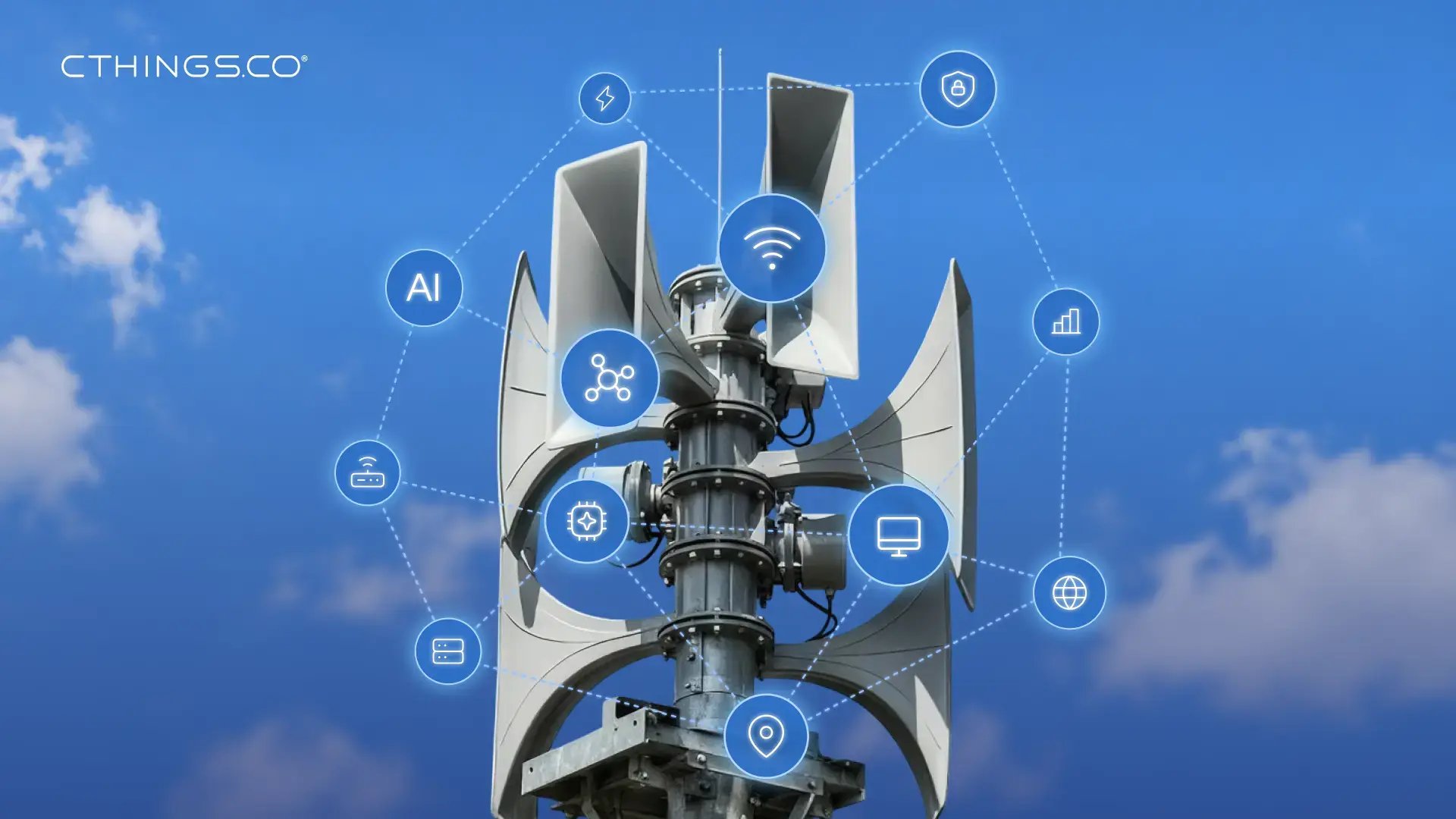
This creates a distributed model where intelligence exists across multiple layers:
- Edge devices
- Local systems
- On-site infrastructure
- Cloud services
While this architecture enables real-time decision-making and autonomy, it also introduces a new layer of operational complexity. Systems are no longer isolated, they are interconnected, interdependent, and continuously evolving.
For organizations, the challenge becomes ensuring that this distributed intelligence behaves as a cohesive system over time.
CTHINGS.CO addresses this by providing an orchestration layer that brings structure to distributed environments. With the Orchestra Platform, edge nodes can be managed as part of a unified system, enabling consistent deployment, monitoring, and control across the entire infrastructure.
Edge AI Is Maturing and Raising the Bar for Operations
Another clear signal from embedded world Exhibition & Conference was that edge AI has reached maturity across the hardware spectrum. From ultra-low-power devices to high-performance processors, AI capabilities are now widely integrated into embedded platforms.
As a result, differentiation is no longer defined by whether AI can run at the edge, but by how effectively it can be deployed, maintained, and scaled in production.
This introduces new operational requirements:
- Managing AI workloads across distributed nodes
- Monitoring performance and system health in real time
- Updating models and applications throughout the lifecycle
At the event, we demonstrated a real-world example of this shift: a market-proven deposit system powered by Edge AI, operating across thousands of distributed nodes.
What makes this deployment significant is not just the use of AI, but the ability to manage it as a coordinated system. Using the Orchestra Platform, these nodes are operated as a single fleet, with centralized visibility, control, and end-to-end security.
This reflects a broader industry reality: as AI moves into production environments, operational capability becomes as important as computational capability.
The Rise of Platform-Based Embedded Systems
A structural change highlighted at embedded world is the move toward platform-based development in embedded systems.
Historically, embedded solutions were often built as custom, tightly coupled systems. Today, the increasing complexity of connected environments is driving a different approach — one based on reusable platforms, integrated tooling, and standardized workflows.
This transition is being driven by several factors:
- The need for continuous updates and improvements
- Growing security and compliance requirements
- The integration of AI and data-driven functionality
- The big scale of modern deployments
In this context, platforms are no longer optional. They provide the foundation required to manage complexity and ensure long-term sustainability.
CTHINGS.CO contributes to this shift by delivering an operational platform layer that abstracts the complexity of distributed systems. It allows organizations to move from fragmented deployments to structured, repeatable operations, reducing the burden on engineering teams and accelerating time to value.
Security as a Continuous Lifecycle Requirement
The upcoming enforcement of the EU Cyber Resilience Act adds a new dimension to embedded system design and operation.
Security is no longer limited to device-level features implemented at development time. It now requires continuous management throughout the entire lifecycle of a product.
This includes:
- Ongoing vulnerability monitoring
- Transparent software composition (SBOM)
- Timely updates and patching
- System-wide visibility
For organizations operating distributed systems, meeting these requirements without centralized infrastructure is increasingly difficult.
The Orchestra Technology Stack supports this need by enabling secure connectivity, centralized control, and lifecycle management across distributed environments. It provides the operational foundation required to maintain security standards over time, rather than treating security as a one-time implementation.
From Individual Deployments to Managed Fleets
Perhaps the most important takeaway from Embedded World 2026 is the shift in how connected systems are conceptualized.
The industry is moving away from thinking in terms of individual devices and toward managing entire fleets of interconnected systems.
This shift changes the nature of the problem:
- Deployment is no longer the endpoint — it is the starting point
- Systems must be monitored, updated, and optimized continuously
- Infrastructure must support coordination across large-scale environments
This is where orchestration becomes essential.
The CTHINGS.CO Orchestra Technology Stack enables organizations to operate connected systems as unified fleets, providing the tools needed for:
- Centralized fleet management
- Real-time visibility and diagnostics
- Scalable lifecycle operations
By bringing these capabilities together, organizations can transition from isolated deployments to fully operational, production-ready infrastructure.
Looking Ahead
Embedded World made it clear that intelligence is rapidly moving into the physical world. The technologies required to build connected, intelligent systems are now widely available.
The next phase of the industry will be defined not by innovation at the component level, but by the ability to operate complex systems at scale.
For companies building connected products and infrastructure, the focus is shifting toward operational excellence, ensuring that systems remain reliable, secure, and adaptable over time.
At CTHINGS.CO, we enable organizations to move beyond deployment and toward sustainable, large-scale operations of connected systems.


.svg)
.svg)


