


















%20-%20Edge%20computing.png?width=264&height=264&name=Glass%20icon%20(dark)%20-%20Edge%20computing.png)
Beyond the Data Center: Why Edge Orchestration Has Become Critical
A month after Data Center World 2026, one thing remains clear: the conversation around infrastructure is rapidly shifting beyond the traditional data center.
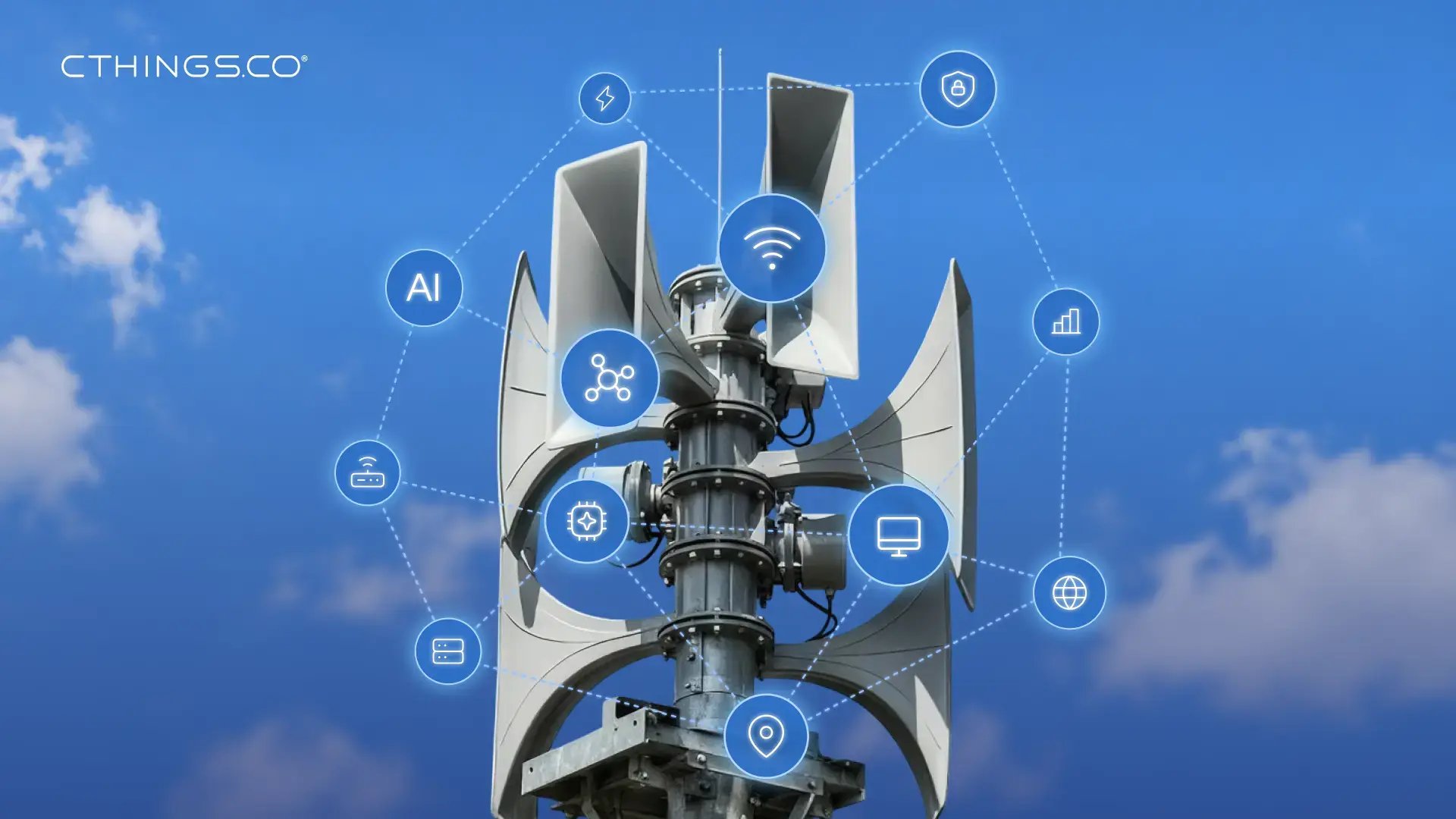
As organizations scale AI, automation, industrial IoT, and real-time processing, infrastructure is becoming increasingly distributed—spanning factories, logistics networks, connected devices, remote operations, and edge environments operating far outside centralized systems.
This shift is redefining the operational realities of modern infrastructure.
The Edge Is Now the Dominant Surface Area
Traditional infrastructure assumptions no longer reflect how modern systems actually operate.
What was once designed around stable connectivity, centralized control, and trusted internal networks must now function across fragmented environments, intermittent connectivity, and physically exposed devices.
Organizations are increasingly managing infrastructure where:
- networks are unreliable or lossy,
- systems combine legacy and modern technologies,
- devices operate autonomously across thousands of locations,
- and security can no longer rely on a centralized perimeter.
As the amount of globally generated data continues to grow—projected to reach 221 zettabytes in 2026—the challenge is no longer simply storing or processing data. The challenge is orchestrating infrastructure securely and reliably at scale.
Why Edge Orchestration Matters
Modern edge infrastructure introduces four critical operational challenges:
Security
Distributed environments dramatically increase the attack surface, particularly across physically exposed devices and remote infrastructure.
Scalability
Organizations must manage increasingly large and diverse device fleets while maintaining operational consistency.
Operations
Maintaining uptime, observability, application lifecycle management, and updates across distributed environments introduces significant operational complexity.
Integration
Modern infrastructure rarely exists in isolation. Organizations must integrate edge systems with existing IT, OT, cloud, and legacy environments.
These challenges are driving growing demand for unified orchestration platforms capable of managing edge infrastructure holistically.
Orchestra: Built for Distributed Infrastructure
At CTHINGS.CO, this shift has shaped the development of the Orchestra Technology Stack—a unified orchestration platform designed specifically for distributed edge infrastructure.
Orchestra simplifies the deployment, management, and security of large-scale edge environments by combining device provisioning, orchestration, monitoring, networking, and application lifecycle management into a single operational layer.
The platform enables organizations to:
- onboard and provision edge devices globally,
- manage fleets exceeding thousands of distributed nodes,
- deploy and update containerized applications remotely,
- maintain real-time operational visibility,
- automate updates and patching through resilient OTA infrastructure,
- and implement zero-trust security models across environments.
Secure-by-Design Infrastructure
Security at the edge requires a fundamentally different approach from traditional infrastructure. Unlike centralized environments, edge systems often operate across physically exposed locations, fragmented networks, and heterogeneous device fleets—making resilience and trust critical from the operating system upward.
OrchestraOS was designed to help organizations strengthen security, reduce operational risk, and maintain infrastructure integrity across distributed environments.
To support this, the platform incorporates:
- Protecting device identity and platform integrity: TPM2-backed cryptography and secure boot
- Ensuring secure and reliable updates: encrypted filesystems and resilient A/B partitioning
- Improving software transparency and vulnerability visibility: integrated SBOM and CVE management
- Supporting enterprise-grade security integration: bring-your-own PKI capabilities
Combined with Orchestra SDN, organizations can establish secure, software-defined connectivity across geographically distributed infrastructure while integrating with existing IDS/IPS and SIEM/SOAR ecosystems.
Industry Recognition at Data Center World 2026
This growing need for secure and scalable edge orchestration was reflected at this year’s Data Center World 2026 in Washington, D.C., where CTHINGS.CO was recognized among the top 4 finalists globally in the Data Center World Innovation Challenge (Networking & IT category), powered by ABB.
During the event, the company showcased how Orchestra helps organizations manage distributed infrastructure across real-world operating environments—where connectivity is unpredictable, systems are heterogeneous, and operational continuity is critical.
The Future of Infrastructure Is Distributed
As edge environments continue to expand, orchestration is becoming a foundational layer of modern infrastructure operations.
Organizations are no longer managing a single centralized environment—they are operating dynamic ecosystems spanning cloud, edge, industrial systems, and connected devices simultaneously.
The ability to orchestrate these environments securely, intelligently, and at scale will increasingly define the next generation of infrastructure resilience and operational efficiency.
Learn More
Explore Orchestra technology stack


.svg)
.svg)


